
When someone sits at a casino table for the first time, one question quietly sits in the back of their mind.
How does the casino know exactly how much I win?
From the outside, it looks simple. You place a bet, the game ends, and the dealer pushes chips toward you. But behind that moment is a structured system based on mathematics, probability, and fixed payout rules.
Casinos cannot guess payouts. Every game operates under strict rules that determine exactly how much a player receives when they win.
Understanding this system makes the casino world far less mysterious. It becomes clear that every win follows a predictable structure built long before the game even begins.
Let’s explore how casinos calculate winnings and why the numbers always follow a consistent pattern.
Every Casino Game Has Fixed Payout Rules
The first thing to understand is that every casino game has predefined payout rules. These rules are created during the design of the game and do not change while players are playing.
For example, consider roulette.
In roulette, players can bet on many outcomes. A bet on a single number pays much more than a bet on red or black. The reason is simple: selecting one exact number is far more difficult than choosing a color.
Here is how typical roulette payouts work:
| Bet Type | Typical Payout |
| Single number | 35 to 1 |
| Red or black | 1 to 1 |
| Dozen bet | 2 to 1 |
This means if a player bets $10 on a single number and wins, they receive $350 plus their original $10 bet.
The payout rules are not decided in the moment. They are written into the game before the casino ever opens its doors.
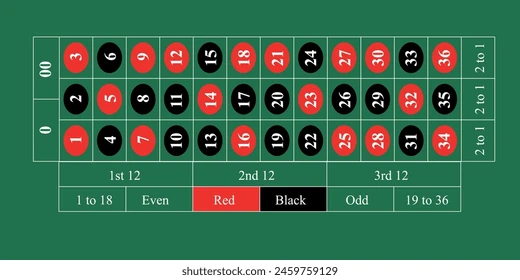
Roulette payouts depend on the difficulty of the bet. The harder it is to predict the outcome, the higher the payout.
Probability Determines the Size of the Payout
Behind every casino payout is a concept called probability.
Probability measures how likely an event is to happen. Rare events usually pay more because they occur less often.
Let’s look at a simple example with dice.
If you roll a single die, the chance of getting a specific number is 1 out of 6. But if someone asks you to roll the same number three times in a row, the probability becomes much smaller.
Because the event becomes harder to achieve, the reward would normally be higher.
Casinos use this exact principle when designing games.
Rare outcomes receive higher payouts, while common outcomes receive smaller rewards. This balance allows games to remain exciting while still maintaining a predictable mathematical structure.
According to gaming industry statistics, slot jackpots may appear only once in tens of thousands or even millions of spins, which is why they offer such large rewards.
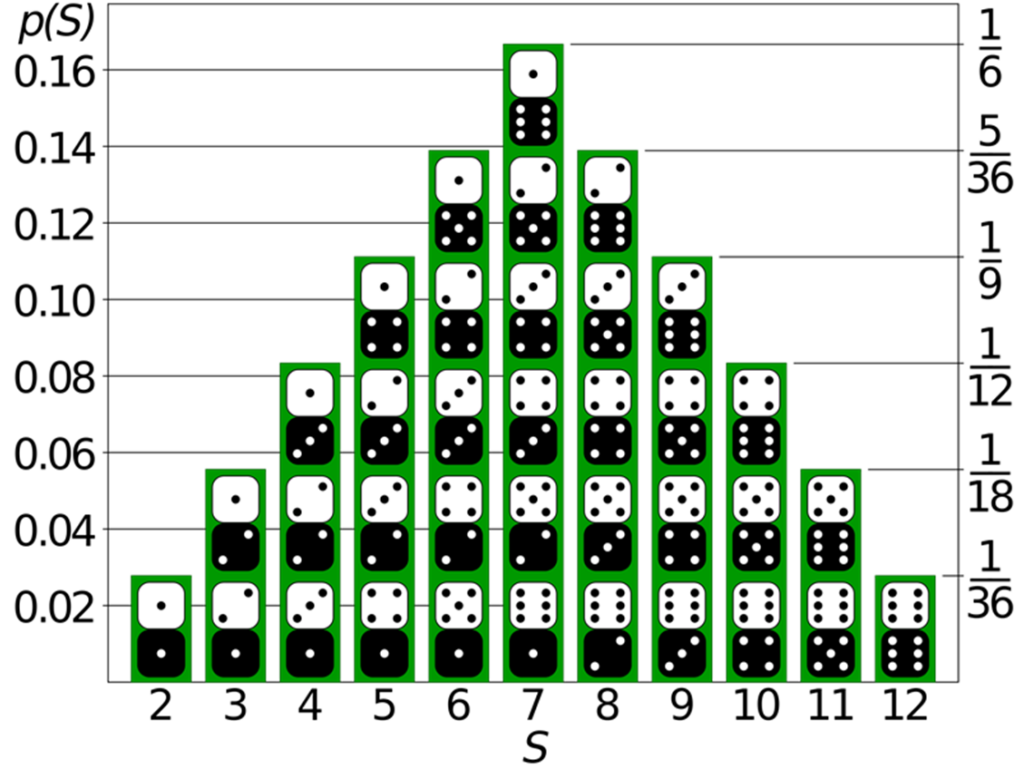
Probability graphs illustrate how rare outcomes sit at the edges while common outcomes appear more frequently in the center.
Payout Examples from Popular Casino Games
Different casino games use different payout systems.
Blackjack
In blackjack, most wins pay 1 to 1.
If you bet $50 and win the hand, you receive $50 in profit plus your original bet.
However, a natural blackjack (an Ace with a ten value card) usually pays 3 to 2.
Example:
| Bet | Result | Total Return |
| $20 bet | Regular win | $40 |
| $20 bet | Natural blackjack | $50 |
Because blackjack occurs less often than a regular win, the payout is higher.
Slots
Slot machines use something called a paytable.
The paytable lists every symbol combination and how much it pays.
Example:
| Symbol Combination | Example Payout |
| Three basic symbols | 5x bet |
| Three premium symbols | 50x bet |
| Jackpot combination | 1000x bet or more |
The rarer the symbol combination, the larger the payout.
Slot machines determine payouts using internal paytables that assign values to symbol combinations.
Random Number Generators Decide the Outcome
Modern casino games rely on Random Number Generators (RNGs).
An RNG produces thousands of random numbers every second. When a player spins a slot or presses a button, the system instantly selects one of these numbers.
That number determines the final result.
Because of RNG technology:
- Each spin is independent
- Past results do not affect future results
- Outcomes remain unpredictable
Gaming regulators test these systems to ensure fairness.
Industry testing labs analyze millions of simulated spins to confirm that games follow their designed payout percentages.
What Real Players Say About Casino Payouts
Players who track their gameplay often notice how structured yet unpredictable casino results can be.
One experienced casino player shared this observation:
“The payouts look random, but once you understand the paytables and probabilities, you realize every outcome is already part of the game design.”
Another player described their experience with slot machines:
“I once hit a bonus round that paid more than 200 times my bet. But it took hundreds of spins before that happened.”
These experiences reflect how casino math works in practice. Large wins are possible, but they occur rarely because they are built around lower probabilities.
Chips, Credits, and the Final Calculation
After the game result is determined, the casino calculates winnings using chips or digital credits.
At table games, dealers perform the calculations manually.
For example:
If a player bets $25 on a 2 to 1 payout, the dealer multiplies the bet and returns:
- $50 in winnings
- plus the original $25 bet
Total returned: $75
Dealers are trained to perform these calculations quickly and accurately in front of players.
In slot machines and digital games, the process happens automatically.
The machine checks the symbol combination against the paytable and instantly adds the correct number of credits to the player’s balance.
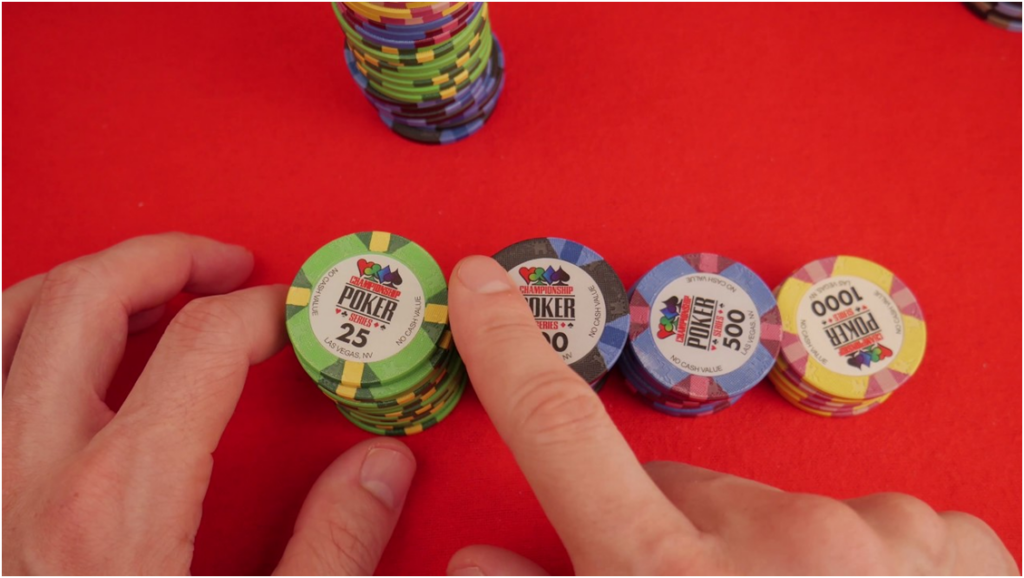
Casino chips allow dealers to quickly calculate and distribute winnings during table games.
The Balance Between Math and Emotion
When you look closely, casino payouts are not mysterious at all. They follow a clear system built on probability, predefined payout tables, and simple arithmetic.
But numbers alone do not explain the experience players feel when they win.
The moment when chips slide across the table or when a slot machine celebrates a big prize creates excitement that feels personal and memorable.
Casinos combine two very different worlds.
One world is mathematical and structured. It is filled with probability models, payout tables, and carefully tested game rules.
The other world is human and emotional. It is filled with anticipation, risk, and the thrill of a possible win.
When a player wins, those two worlds meet for a brief moment.
The mathematics quietly confirms the payout.
And the player enjoys the excitement of the reward.