

When people sit down to play a casino game, most of their attention stays on the surface. They see the cards on the table, the spinning roulette wheel, or the flashing lights of a slot machine. A bet is placed, a short moment passes, and then the result appears.
To the player, the whole process feels quick and simple.
But behind that short moment, a complex system is working quietly. Every casino game follows a structured process that determines outcomes. These systems are built using mathematics, probability, and technology designed to produce fair and unpredictable results.
Think of it like a restaurant kitchen. When you sit at the table, you only see the finished meal. The real preparation happens behind the door where chefs follow recipes, measure ingredients, and carefully cook each dish.
Casino games operate in a very similar way.
Behind the reels, cards, and wheels, there are hidden mechanisms deciding every result.
The Rules That Guide Every Game
Every casino game begins with a clear set of rules. These rules create the structure of the game and ensure that every round follows the same logic.
For example, roulette wheels contain a fixed number of numbered pockets.
- European roulette has 37 pockets numbered 0 to 36
- American roulette has 38 pockets, adding a double zero
This design directly determines the odds. A single number bet in European roulette has a 1 in 37 chance, which equals about 2.7 percent probability.
Because the wheel structure never changes, mathematicians can calculate the exact probability of every bet.
The same principle applies to card games.
In blackjack, the deck contains 52 cards. Once the cards are shuffled, their order becomes unknown, but the number of possible combinations remains limited. This allows casinos and statisticians to calculate the probability of different outcomes such as getting a blackjack or busting.
Dice games follow the same logic.
Each die has six sides, so rolling two dice creates 36 possible combinations. Some outcomes are more likely than others. For example:
- Rolling a 7 has 6 possible combinations
- Rolling a 2 has only 1 possible combination
These rules form the foundation of every casino game.
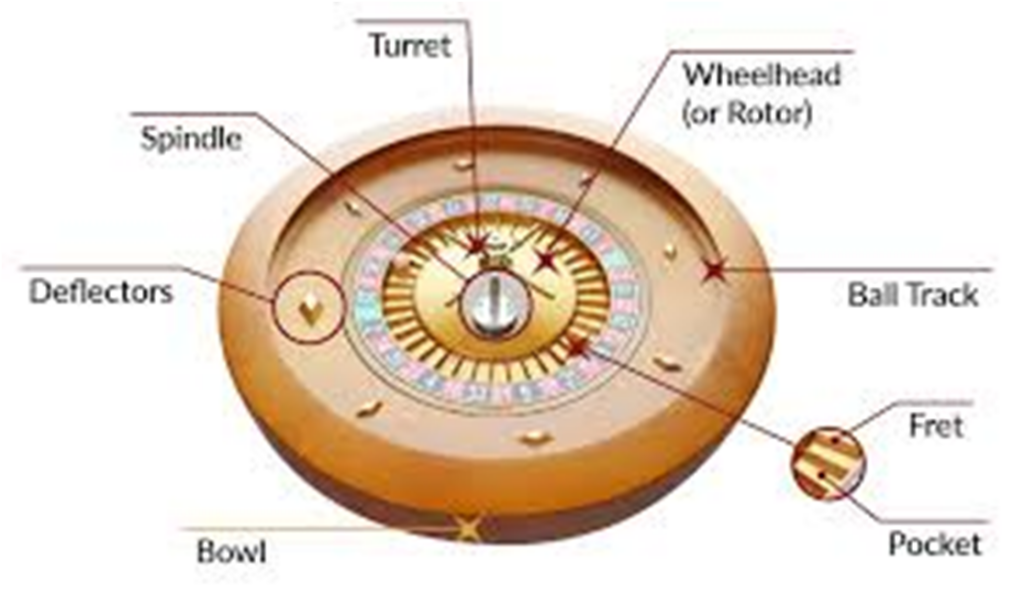
Roulette wheels are precisely engineered so that each numbered pocket has the same chance of receiving the ball over long periods of play.
How Randomness Is Created
A common question many players ask is this:
If games follow strict rules, how can results still be random?
Randomness appears through motion, mixing, and unpredictable physical forces.
In physical casino games, randomness is created through movement.
For example, when a roulette dealer spins the wheel and releases the ball, many small factors affect the result:
- the speed of the spin
- the direction of the ball
- tiny bumps on the wheel
- friction between the ball and metal track
Even the smallest variation in these factors can change the final number.
Card games generate randomness through shuffling. When a deck is shuffled thoroughly, the order of the cards becomes extremely difficult to predict.
Statisticians estimate that a properly shuffled deck can have over 52 factorial possible arrangements, which equals roughly 80 undecillion combinations. That number is larger than the number of stars in the observable universe.
This enormous number of combinations ensures that predicting the next card is practically impossible.

Shuffling creates massive numbers of possible card arrangements, making each game round unpredictable.
The Role of Random Number Generators in Modern Games
While traditional casino games rely on physical motion, modern slot machines and online games depend on technology.
At the center of these systems is a program called a Random Number Generator, often known as an RNG.
An RNG continuously generates thousands of numbers every second. This happens even when no one is playing the game.
When a player presses the spin button, the machine instantly selects the current number produced by the generator. That number corresponds to a specific symbol combination on the reels.
To the player, the reels appear to spin and stop. Behind the scenes, the result has already been determined by the number selected.
The speed of this system makes prediction impossible. By the time a player presses the button, the generator has already produced thousands of possible outcomes.
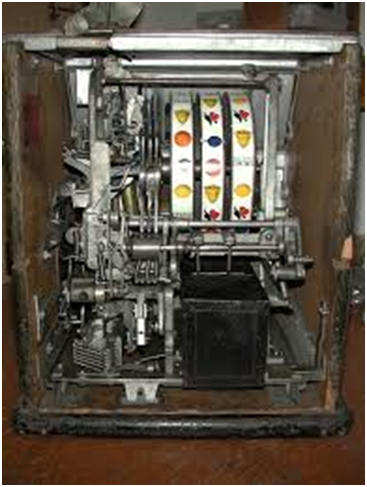
Modern slot machines rely on computer chips and random number generators to determine outcomes instantly.
Industry Statistics About Casino Game Randomness
Several studies and gaming authority reports provide insight into how casino games operate.
Some interesting industry statistics include:
- Modern RNG systems can generate thousands of random numbers per second
- Online slot games typically offer RTP values between 94 percent and 98 percent
- A well shuffled deck has more possible arrangements than there are seconds since the Big Bang
These numbers highlight how powerful the mathematical systems behind casino games truly are.
What Real Players Say About the Process
Players who study casino games often realize how unpredictable the systems can be.
One experienced blackjack player explained their observation in an online discussion:
“I used to think the table had hot and cold streaks. After tracking hundreds of hands I realized the results were simply random clusters.”
Another slot player shared a similar experience:
“Sometimes I hit a bonus within the first few spins. Other times I can play for half an hour without seeing one. The machine is just doing its own thing.”
These comments reflect a common realization among experienced players. The games are not reacting emotionally or following patterns the way humans imagine.
They simply follow probability.
Why Players Often Misunderstand the System
Human brains are naturally designed to search for patterns. When people see several similar results in a row, they often believe something meaningful is happening.
For example, if red appears several times in roulette, some players assume black is more likely next.
In reality, each spin is independent.
The wheel does not remember previous spins, and the probability remains the same every time.
This misunderstanding is known as the gambler’s fallacy, a common cognitive bias in games of chance.
Understanding this concept can help players see casino games more clearly.
The Hidden System Behind Every Result
Behind every casino game there is a structured system working quietly.
Rules define the structure of the game. Motion and mixing create unpredictability. Technology adds powerful random number generation to modern machines.
All these elements combine to produce the simple moment every player experiences.
A bet is placed.
The game runs its hidden process.
The result appears.
For the player, it feels like a short pause filled with anticipation.
For the system behind the game, it is the result of mathematics, physics, and probability working together.
That moment of waiting, when everyone wonders what will happen next, has been part of gambling for centuries.
From ancient dice games to modern digital slot machines, the unseen process behind the scenes continues doing its quiet work.
The player watches the outcome.
The system has already decided it.